Furnace Replacement in Waltham, Massachusetts
Furnace Replacement in Waltham, MA
Is It Time to Replace Your Old Furnace?
An older furnace that keeps breaking down can leave you wondering whether another repair is worth the cost. Maybe the system is having trouble heating the house, needs a major component replaced, or has become less dependable during cold weather.
Replacing a furnace is a significant decision. The right choice depends on more than the age of your current unit. Heating capacity, efficiency, ductwork, venting, equipment condition, and installation requirements all play a role.
Waltham Furnace & AC Pro helps homeowners in Waltham, Massachusetts find assistance with furnace replacement needs. Call to discuss your existing heating system, the problems you're experiencing, and the options worth considering.
Old Furnace • Frequent Repairs • New Furnace Options • Heating System Sizing
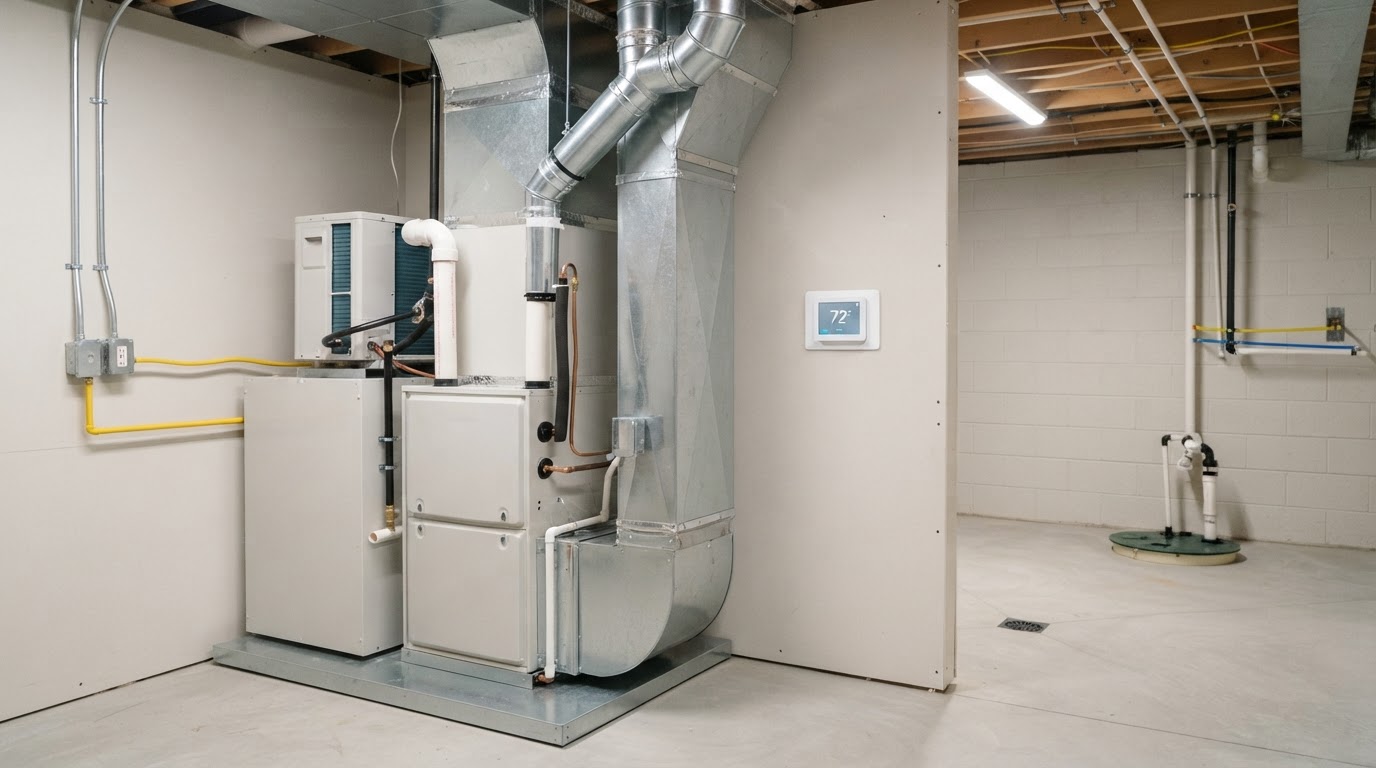
Know When to Consider a New Furnace
Signs Your Furnace May Need Replacement
A furnace doesn't have to fail completely before replacement becomes worth considering. In some homes, the decision comes after several repairs. In others, a major failure or ongoing comfort issue prompts a closer look.
Your Furnace Needs Frequent Repairs
Replacing one worn component may make sense. But if the furnace needs attention repeatedly, the combined repair costs and reliability concerns can change the calculation. Several breakdowns over a short period may be a reason to compare the cost of keeping the system with the cost of a new furnace.
The Furnace Is Getting Older
Heating equipment has a limited service life, but age alone cannot tell you whether a furnace should be replaced. An older furnace that has been maintained and continues to operate reliably may be in a different position from a younger unit with repeated failures or serious installation problems. Condition matters as much as the number of years it has been installed.
The House Never Gets Warm Enough
If the thermostat is set to a comfortable temperature but the house stays cold, the problem could involve the furnace, the air distribution system, or heat loss from the building. A properly selected replacement may be part of the solution when existing equipment is no longer suitable. However, a new furnace will not automatically correct poor insulation, air leaks, or inadequate ductwork.
Heating Costs Have Increased
Higher utility bills can have many causes, including weather, energy prices, thermostat settings, and building conditions. Reduced furnace performance or older equipment efficiency may be relevant, but higher bills alone do not prove the furnace needs replacement.
A Major Component Has Failed
Certain failures can lead homeowners to evaluate whether repairing the existing furnace is practical. The cost and availability of the required parts, overall equipment condition, and safety considerations all matter.
Your Heating Needs Have Changed
An addition, renovation, insulation upgrade, window replacement, or change in how rooms are used may affect the home's heating requirements. If your home has changed substantially since the existing furnace was installed, it may be worth reassessing the appropriate equipment size and configuration.
Section conclusion
No single warning sign automatically means your furnace must be replaced. The strongest decision comes from comparing the current system's condition, repair needs, and the suitability of available replacement options.
Making an Informed Decision
Should You Repair or Replace Your Furnace?
One of the biggest concerns homeowners have is whether they're replacing equipment that could have been repaired.
A furnace repair and a complete replacement are very different investments. The decision should consider the actual problem, the existing system, and the likely value of each option.
When Furnace Repair May Make Sense
Repair may be a reasonable option when:
- The furnace is otherwise in good condition.
- The problem involves a repairable component.
- The required part is available.
- The repair cost is practical compared with replacement.
- The furnace has not experienced repeated major failures.
- There is no unresolved safety concern that makes continued operation inappropriate.
A malfunctioning ignitor, thermostat, blower component, or control may sometimes be repaired without replacing the entire furnace. The specific diagnosis and equipment condition determine whether that approach is suitable.
When Furnace Replacement May Make Sense
Replacement deserves closer consideration when:
- Breakdowns are becoming frequent.
- Multiple expensive repairs are anticipated.
- The existing furnace has a serious component failure.
- Important parts are no longer readily available.
- Safety concerns affect the system's continued use.
- The furnace is poorly matched to the home's heating needs.
- The equipment no longer provides dependable comfort.
Don't Decide Based on Furnace Age Alone
Homeowners often ask whether a furnace that is 15, 20, or more years old should automatically be replaced.
There is no single age cutoff that applies to every unit. Equipment design, installation quality, maintenance history, operating conditions, and the type of failure all influence whether a repair remains worthwhile.
Think About the Total Decision
Before choosing, compare:
- The cost of the proposed repair
- The furnace's present condition
- Its recent repair history
- The nature of any safety concerns
- Whether comfort problems existed before the breakdown
- The estimated cost and scope of replacement
- Equipment availability and installation considerations
A new furnace may offer benefits, but the value depends on the specific home and installation.
Choosing the Right Equipment
Why Proper Furnace Sizing Matters
A new furnace should be selected for the heating requirements of the home, not simply because it is the same size as the old system.
Furnace heating capacity is commonly expressed in British thermal units per hour, abbreviated BTU/h. The correct capacity depends on how much heat the home loses during the conditions the heating system is designed to handle.
What Affects a Home's Heating Requirements?
Important factors may include:
- Total conditioned floor area
- Insulation levels
- Windows and exterior doors
- Air leakage
- Ceiling heights
- Building layout
- Exposure and design weather conditions
- Ductwork characteristics
- Changes made during renovations
Two homes with similar square footage may have different heating needs.
What Happens if a Furnace Is Too Large?
An oversized furnace may provide more heating capacity than the home needs.
Depending on the equipment and controls, this can contribute to short operating cycles, comfort swings, airflow concerns, or unnecessary equipment cycling.
Bigger equipment is not automatically better equipment.
What Happens if a Furnace Is Too Small?
An undersized furnace may struggle to maintain the desired indoor temperature during colder weather.
However, poor heating performance is not proof that an existing furnace is undersized. Problems with airflow, controls, ductwork, insulation, and equipment operation can produce similar symptoms.
What Is a Manual J Calculation?
ACCA Manual J is an industry-recognized method for calculating a home's heating and cooling loads.
A heating load calculation considers the characteristics of the building rather than relying only on square footage or the size of the previous furnace.
The results can help inform suitable equipment selection.
What Is Manual S?
ACCA Manual S addresses selecting equipment based on the building's calculated heating and cooling requirements and the performance characteristics of available systems.
It helps connect the home's needs to the equipment being considered.
Important takeaway
The existing furnace's nameplate size is useful information, but it should not be the only basis for choosing a replacement.
Understanding Furnace Efficiency
What Does AFUE Mean When Buying a Furnace?
AFUE stands for Annual Fuel Utilization Efficiency.
It is a standardized measure of how efficiently a furnace converts the energy in its fuel into useful heating over a typical heating season under rating conditions.
Understanding AFUE Ratings
A furnace rated at 80% AFUE is designed to deliver approximately 80% of the fuel energy as useful heat under the standardized rating framework.
A furnace rated at 95% AFUE delivers a larger share of that energy as useful heat under the same type of rating framework.
A higher AFUE rating generally indicates greater fuel-use efficiency. However, AFUE is not a guarantee of a specific heating bill or an exact percentage of savings after replacement.
What Affects Actual Heating Costs?
Your real heating costs depend on several factors:
- Local weather and winter conditions
- Thermostat settings
- Fuel rates
- Home insulation and air leakage
- Equipment sizing
- Ductwork and airflow
- Installation quality
- Household heating habits
A more efficient furnace can reduce the amount of fuel needed to deliver a comparable amount of heat, but actual financial results depend on the home and how the equipment is used.
Efficiency Is Only One Part of the Decision
A furnace with a higher AFUE rating may have different equipment costs, venting requirements, condensate arrangements, or installation considerations.
Comparing the full installation scope is more useful than selecting equipment based on a single efficiency number.
Furnace Equipment Types
80% AFUE vs. High-Efficiency Condensing Furnaces
Not all gas furnaces handle combustion exhaust and heat recovery in the same way.
Two broad categories homeowners may encounter are noncondensing furnaces and high-efficiency condensing furnaces.
Noncondensing Furnaces
Many conventional gas furnace designs use a primary heat exchanger and exhaust relatively warm combustion gases through an appropriate venting system.
The 80% AFUE category is commonly associated with noncondensing residential gas furnaces.
These systems have venting and installation requirements that differ from those of many condensing models.
High-Efficiency Condensing Furnaces
Condensing furnaces recover additional heat from combustion gases, typically using a secondary heat exchanger.
As the gases cool, water vapor can condense. The equipment therefore requires appropriate condensate handling in addition to a suitable venting arrangement.
Condensing models commonly have AFUE ratings in the 90% range or above, although specifications vary by exact equipment.
Venting Differences Matter
Replacing an older noncondensing furnace with a condensing model may require changes to exhaust venting, combustion-air arrangements, condensate drainage, and other installation details.
A replacement should be evaluated for the actual building and the manufacturer's instructions.
Is a Higher-Efficiency Furnace Always the Best Choice?
Not automatically.
The best fit is the equipment and installation approach appropriate to the particular home.
Furnace Comfort Features
Single-Stage, Two-Stage and Modulating Furnaces
When comparing furnace models, you may see terms describing how the burners operate and how air moves through the system.
These features can influence heating behavior and comfort.
Single-Stage Furnaces
A single-stage furnace typically operates its burners at one main heating output when heat is requested.
This is a straightforward equipment design that may be appropriate for some homes.
Two-Stage Furnaces
A two-stage furnace can operate at more than one heating output level.
Under suitable conditions, it may run at a lower heating stage for part of the heating demand and move to a higher stage when additional heat is needed.
Actual operation depends on the furnace, thermostat, controls, and installation.
Modulating Furnaces
A modulating furnace can adjust its heating output across a broader range.
This can help the equipment respond more gradually to changing heating requirements when correctly selected and configured.
Not all homes require the same level of equipment complexity.
What Is a Variable-Speed Blower?
The furnace blower moves air through the home's duct system.
Some equipment uses electronically controlled blower motors capable of operating at different airflow settings.
Variable-speed operation can support particular comfort and control strategies, but a motor's capabilities do not overcome every ductwork restriction.
Does Two-Stage or Variable-Speed Equipment Save Money?
These features can affect operating characteristics, but actual energy use depends on the entire system.
No specific energy savings should be assumed without evaluating the proposed equipment and installation.
Furnace features should be considered alongside proper sizing, airflow, existing controls, and installation requirements. A longer list of features does not necessarily mean a better match for every home.
More Than the Furnace Cabinet
Will Your Existing Ductwork Work With a New Furnace?
Replacing the furnace does not automatically correct problems in the duct system.
Your ducts and return-air pathways are responsible for moving air throughout the house. Their configuration affects how a new furnace performs.
Supply Airflow
Supply ducts deliver heated air to rooms.
If the duct system creates excessive resistance or does not distribute air appropriately, some rooms may receive less heat than others.
Return Airflow
Return ducts bring household air back to the furnace.
Insufficient return airflow can restrict the amount of air moving through the heating system and contribute to comfort or equipment-operation problems.
Filter Configuration
The type, size, and condition of the air filter affect airflow.
A filter that is too restrictive for the system may create problems even when it captures airborne particles effectively.
Blower Compatibility
The proposed furnace's blower characteristics should be suitable for the connected ductwork and heating equipment.
A powerful blower does not automatically solve an undersized or poorly designed duct system.
What Is Manual D?
ACCA Manual D is an industry-recognized method for residential duct system design.
It addresses duct sizing and airflow requirements associated with the home's heating and cooling needs.
Not every furnace replacement requires rebuilding the ductwork, but existing duct conditions should not be ignored when they affect performance.
Helpful takeaway
If your old furnace left certain rooms too cold, made excessive airflow noise, or repeatedly overheated, those conditions should be discussed before selecting a replacement.
Planning the Replacement
What Should Be Evaluated Before a Furnace Is Replaced?
A furnace replacement involves more than removing one cabinet and connecting another.
The installation details depend on the equipment, fuel type, building, and existing mechanical systems.
Existing Furnace and Equipment Condition
The current furnace's model, capacity, efficiency, fuel type, venting, and operating history provide useful starting information. An assessment can help establish whether the new equipment should closely match the existing configuration or whether changes are appropriate.
Mechanical-Room Space and Access
The new furnace needs suitable installation space, required clearances, and access for operation and future service. Basement stairways, closets, utility rooms, doors, and surrounding equipment can affect the practical installation approach.
Fuel and Electrical Connections
Gas-fired furnaces depend on an appropriate fuel-supply arrangement. Furnace controls and blowers also require suitable electrical connections. Any necessary changes must be handled according to applicable requirements by qualified personnel.
Venting and Combustion Air
The venting arrangement must be compatible with the proposed equipment and building conditions. This is particularly important when changing furnace efficiency categories or equipment designs. Combustion venting should never be modified using guesswork or incompatible materials.
Condensate Drainage
High-efficiency condensing furnaces commonly produce condensate. The installation may require a suitable drainage route, trap, pump, or other components depending on equipment design and site conditions.
Thermostat and Controls
A replacement furnace may have control capabilities different from the existing unit. Thermostat compatibility, wiring, staging, and blower-control arrangements should be considered.
Existing Central Air Conditioning
Some homes use the furnace blower and ductwork for both heating and central air conditioning. If an indoor AC coil is installed at the furnace, physical fit, airflow, controls, and other compatibility considerations may affect the replacement. Replacing the furnace does not automatically mean the central AC must be replaced.
Permits and Applicable Requirements
Furnace replacement may involve municipal permits and trade-specific requirements depending on the work. Waltham and Massachusetts have applicable building, gas-fitting, electrical, and other requirements. The exact permits and licensed trades needed should be determined for the particular project. Do not assume that every replacement has the same permit requirements.
Understanding the Work
What Is Involved in Replacing a Furnace?
The exact process varies by provider, equipment, and property.
The following describes common considerations in a properly planned replacement, not a guarantee that every installation follows an identical procedure.
Review the Existing System
The existing furnace, home heating requirements, ductwork, venting, and installation conditions may be reviewed to identify suitable replacement options.
Evaluate Equipment Choices
Furnace capacity, efficiency, staging, blower design, physical dimensions, and compatibility with existing systems may influence selection.
Determine the Required Installation Scope
Changes to venting, condensate drainage, controls, fuel connections, duct transitions, or equipment support may be relevant.
Address Applicable Permits and Qualified Trade Work
The installation must comply with requirements that apply to the particular equipment and work performed.
Remove and Replace the Equipment
The old furnace is disconnected and removed as appropriate, and the selected equipment is installed using the required procedures and materials.
Check System Operation
Startup and operating checks help establish whether the installed equipment is functioning according to the applicable specifications. Depending on the system and work scope, this may involve verifying controls, heating operation, airflow, venting, and other operating conditions.
Review Equipment Operation and Care
Homeowners should understand basic thermostat operation, filter requirements, safety information, and available equipment documentation.
Important
The exact scope, installation steps, permits, testing, and service arrangements must be confirmed with the professional handling the replacement.
Understanding Replacement Costs
What Affects Furnace Replacement Cost in Waltham, MA?
Homeowners understandably want to know how much a new furnace will cost before committing to replacement.
The total cost varies because the equipment and the installation conditions are not the same in every home.
Furnace Size and Equipment Type
Heating capacity, efficiency, staging, and blower features can affect the cost of the selected furnace.
Installation Complexity
Replacing equipment with a closely compatible configuration may involve a different scope of work from changing the venting system, condensate arrangement, or mechanical layout.
Ductwork Changes
If the existing ducts or transitions require correction or modification, that can affect the project.
Venting and Drainage
Changes needed for a condensing furnace or another equipment configuration may affect the installation requirements.
Access to the Furnace
Basement access, tight mechanical spaces, and the ability to remove existing equipment can influence labor and logistics.
Controls and Related Components
Thermostat compatibility, control wiring, connected AC components, and other installation details may affect the scope.
Permits and Required Work
Applicable local requirements and trade work are additional considerations.
How to Compare Replacement Proposals
When evaluating a proposal, ask what equipment and work are actually included. Useful details include:
- Proposed furnace manufacturer and exact model
- Heating input and output capacity
- AFUE efficiency rating
- Heating stages and blower features
- Venting and condensate requirements
- Ductwork modifications, if any
- Thermostat and control changes
- Applicable permits
- Equipment and installation warranty terms
- Removal and disposal of the existing unit
- What startup checks or commissioning are included
A lower equipment price does not necessarily mean a lower total project cost if important installation work is excluded.
Waltham Furnace & AC Pro does not publish a universal furnace replacement price because the actual project depends on the equipment and home. Call to discuss your situation and ask about the next step for evaluating replacement options.
Local Heating Needs
Furnace Replacement for Waltham, Massachusetts Homes
Waltham homeowners experience the heating demands of a Massachusetts winter, but no two homes have exactly the same equipment or heat-loss characteristics.
A replacement furnace should be selected for the property, not simply for the town or ZIP code.
Different Homes, Different Installation Requirements
Waltham includes houses and residential buildings with different construction periods, layouts, insulation levels, and mechanical-system configurations.
Homes near Main Street, Moody Street, Lexington Street, Totten Pond Road, and other parts of the city can have very different heating arrangements.
Some have forced-air duct systems. Others rely on boilers, radiators, or hot-water baseboards.
A furnace replacement is appropriate only for a property using or being configured for the relevant forced-air heating system.
Older Home Considerations
An older home may have ductwork or mechanical spaces that differ from newer construction.
That doesn't automatically mean the ducts are inadequate or the heating system is inefficient. It does mean the actual building conditions should be considered when selecting replacement equipment.
Renovations and Home Improvements
Insulation work, window upgrades, air sealing, and additions can change the heating needs of a home.
Those changes may affect the appropriate replacement capacity.
Winter Reliability
Cold weather makes dependable heating especially important.
If your furnace has been unreliable, replacement planning can include considering equipment condition, installation feasibility, and the home's overall heating needs before the next period of heavier use.
Snow and Exterior Venting
Certain high-efficiency furnaces use exterior vent terminations.
Local snow and winter conditions make correct vent placement and unobstructed operation important.
Homeowners should follow equipment safety guidance and avoid modifying combustion venting themselves.
For furnace replacement in Waltham, the goal is to identify equipment and an installation approach suited to the actual home, rather than assuming every property needs the same furnace.
Understanding Equipment Comparisons
Do Furnace Brands and Models Matter?
Furnace manufacturers offer different equipment families with a range of capacities, efficiencies, heating stages, blower designs, and control features.
A brand name by itself does not establish whether a specific furnace is the right choice for a home.
Look at the Exact Model
Two furnaces from the same manufacturer can have substantially different performance characteristics.
Compare the exact model's documented specifications rather than relying only on a brand name or a broad product family.
Confirm Efficiency and Capacity
The proposed model should have a documented efficiency rating and heating capacity appropriate to the property.
Consider Parts and Service Support
Parts availability and the ability to obtain appropriate service for a specific model can be useful considerations.
Review Warranty Terms
Equipment warranties can have eligibility rules, registration requirements, exclusions, and differences between parts and labor coverage.
Ask for the actual warranty documentation associated with the proposed equipment and installation.
Don't Choose Based on Marketing Claims Alone
Terms such as premium, high-efficiency, or advanced comfort should be evaluated alongside measurable specifications and installation suitability.
Important
This website does not claim authorized dealer status or a relationship with any particular furnace manufacturer. Available equipment brands and models must be confirmed with the provider.
Furnace Replacement Safety
Why Furnace Replacement Is Not a DIY Project
A furnace is part of a home's heating and, depending on the equipment, fuel-combustion system.
Replacement can involve gas connections, electrical components, combustion-air requirements, exhaust venting, and safety controls.
Improper installation can create performance problems and serious safety hazards.
Combustion and Venting Safety
Gas-fired furnaces must operate with appropriate combustion and exhaust arrangements. Equipment type and manufacturer instructions determine relevant installation requirements.
Heat Exchanger and Carbon Monoxide Concerns
The heat exchanger separates combustion gases from the air delivered through the home. Suspected damage or carbon monoxide concerns require qualified attention.
Electrical and Control Safety
Furnace controls and blowers use electrical power. Installation and testing must follow applicable safety and trade requirements.
Permits and Qualified Professionals
Massachusetts and local requirements can vary with the work involved. The provider handling the installation should determine and address the applicable licensing, permits, and inspections.
If You Smell Gas or a Carbon Monoxide Alarm Sounds
Leave the building immediately and contact emergency services or your gas utility from a safe location.
Do not attempt to repair, replace, or restart the furnace to investigate a suspected gas leak or carbon monoxide hazard.
Before You Call
What Information Helps When Discussing Furnace Replacement?
You do not need to know which new furnace you want before calling.
The following information can help start a useful conversation.
Existing Furnace Age
If you know approximately how old the furnace is, share that information. An estimate is fine if you do not know the exact installation year.
Current Problems
Describe why you are considering replacement. For example:
- The furnace stopped heating.
- Repair costs are increasing.
- The system needs frequent attention.
- The house doesn't heat evenly.
- A major component has failed.
- You are planning a renovation.
Current Equipment Information
If you already have the model information from prior paperwork, a maintenance record, or an accessible label, that can be helpful. Do not open hazardous or sealed compartments to obtain it.
Home Details
Basic information such as the approximate size of the home, number of floors, and whether the system uses existing ducts may help explain the property. Those details do not replace a proper heating-load assessment.
Existing Air Conditioning
Mention whether the furnace also provides the blower for your central air conditioning system. This can be relevant to compatibility and installation planning.
Project Questions
Consider asking:
- Is repair still a reasonable option?
- What heating capacity is appropriate?
- How will equipment sizing be determined?
- What efficiency options are being considered?
- Does the existing ductwork need attention?
- Will venting or condensate drainage change?
- What is included in the proposed installation?
- What permits apply?
- What warranties apply to the equipment and work?
Call with the information you have. The purpose of the conversation is to explain your situation and determine the appropriate next step.
Furnace Replacement Questions
Frequently Asked Questions About Furnace Replacement
Other Heating & Cooling Services
Related Services in Waltham, MA
Furnace Repair
If your furnace isn't heating, keeps shutting down, or makes unusual noises, find information about common furnace problems and when a repair may be appropriate.
Furnace Cleaning
Dust buildup, clogged filters, and dirty furnace components may affect performance. Learn how furnace cleaning differs from repairing or replacing a heating system.
Central AC Replacement
Replacing your cooling system as well? Learn about central AC sizing, SEER2 efficiency, matched indoor and outdoor equipment, and other replacement considerations.
Need Furnace Replacement Help in Waltham, MA?
Whether your furnace is getting older, repair costs are increasing, or your heating system is no longer dependable, understanding your options is the first step. Call Waltham Furnace & AC Pro to discuss your furnace replacement needs and the next step for your Waltham home.
Furnace Replacement • Furnace Repair • Furnace Cleaning